
Running a busy transport depot, civil construction hub, or commercial equipment hire yard across South Australia requires a fast, efficient, and reliable way to keep your fleet clean. However, setting up a heavy-duty commercial wash bay involves far more than simply hooking up a high-pressure cleaner to a garden hose. Between stringent local EPA discharge regulations, council trade waste approvals, and heavy operational demands, building a commercial wash pad requires specialised fluid engineering from the ground up.
Unfiltered washdown runoff containing heavy oils, grease, diesel fuel, and suspended solids cannot legally enter stormwater networks or municipal sewers. South Australian environmental protection laws enforce strict guidelines regarding trade waste interceptor pits, oil-water separators, and pH neutralisation loops. Installing automated diversion valves or closed-loop water recycling systems ensures your facility stays fully compliant, avoiding massive municipal fines while drastically reducing your ongoing mains water consumption.
A common mistake when designing commercial wash bays is relying solely on high operating pressure (PSI) rather than sufficient water volume (L/min). While pressure strips loose surface dirt, high water flow is what actually carries heavy mud, thick clay, and caked-on site debris down the drain. Furthermore, integrating high-capacity hot water burner loops or wet steam capabilities allows operators to dissolve heavy grease, road film, and hydraulic oil instantly without relying on aggressive chemical over-use.
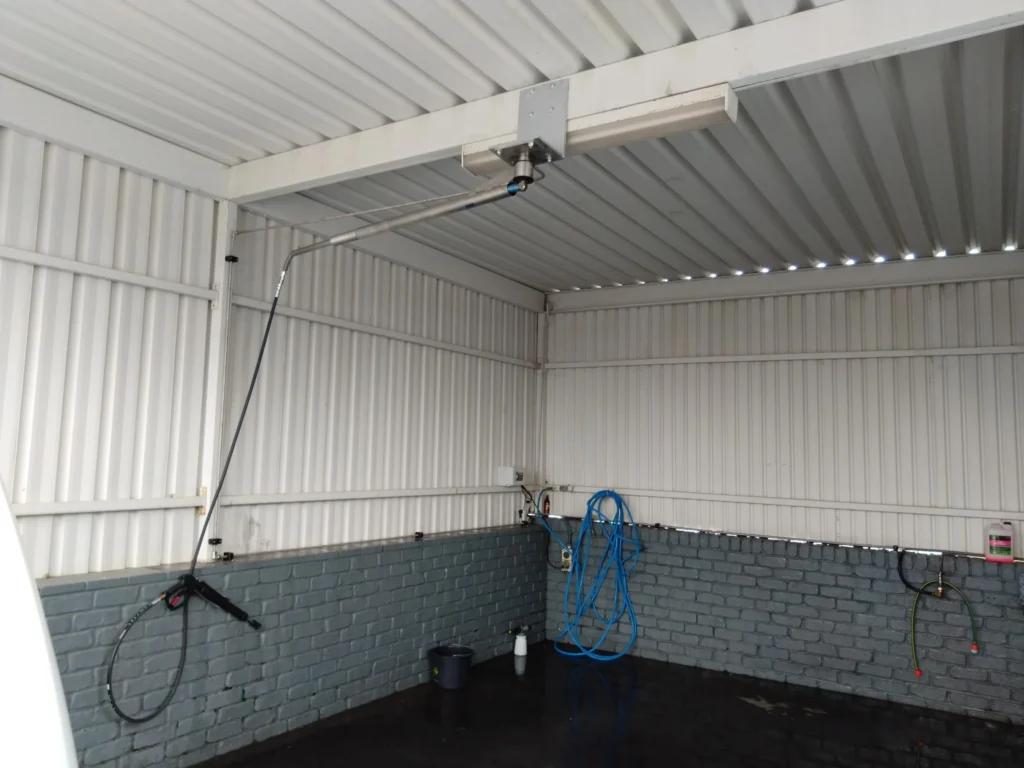
Loose hoses dragging across concrete wash pads create severe trip hazards, suffer rapid physical abrasion from heavy truck tyres, and slow down work rates significantly. Integrating heavy-duty stainless steel overhead boom arms, auto-retractable hose reels, and multi-station quick-connect drops keeps lines off the wet floor, protects your high-pressure hoses from premature failure, and lets your operators move around machinery safely and efficiently.
Off-the-shelf washing setups rarely account for long-term site expansion. Engineering a wash bay with modular manifolds, high-volume supply pipework, and robust secondary filtration gives your facility the flexibility to add extra operator drop stations or automated underbody wash grids down the track without rebuilding your core fluid infrastructure.
Looking to engineer a custom wash bay tailored to your site layout and fleet size? Contact the Adelaide specialists at ACE today to discuss complete design, filtration, and installation options.